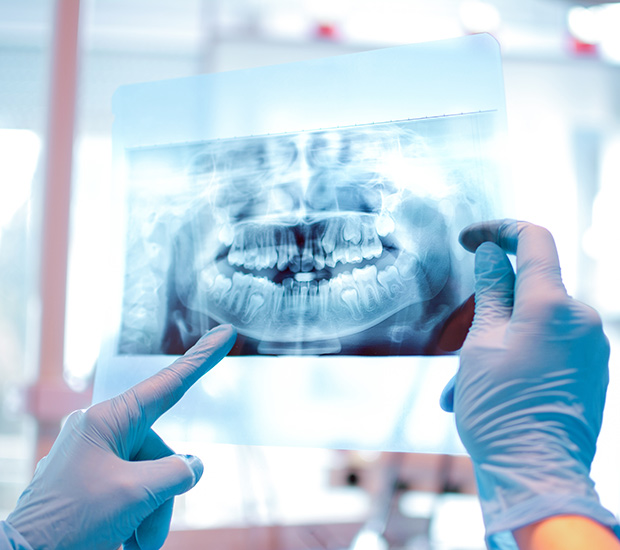
Digital Dental X-RaysSpokane, WA
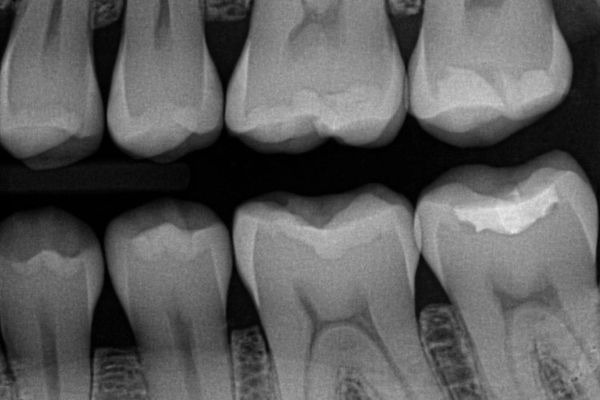
Digital dental x-rays are an essential tool for diagnosing and monitoring your oral health. Instead of traditional film, digital x-rays use an electronic sensor to capture highly detailed images instantly. This allows your dentist to detect cavities, evaluate bone levels, check for infections, and plan treatments with exceptional accuracy — all while keeping your visit quick and comfortable.
Benefits of Digital X-Rays
- Significantly lower radiation
Digital sensors require far less radiation than film, often reducing exposure by 60–80%. This makes them a safer option for patients of all ages. - Instant, high-resolution images
Because the images appear immediately on-screen, your dentist can review them with you right away. Digital files also provide better clarity and can be enhanced (zoomed, brightened, contrasted) to identify issues earlier. - More comfortable and efficient
Digital sensors are designed to fit comfortably in the mouth, and because there’s no need to develop film, appointments are faster. - Environmentally friendly
With no chemical developers or physical film, digital radiography is more sustainable and eliminates hazardous waste. - Easy storage and sharing
Digital images are saved directly to your dental record and can be securely shared with specialists or insurance providers when needed.
Panoramic X-Rays
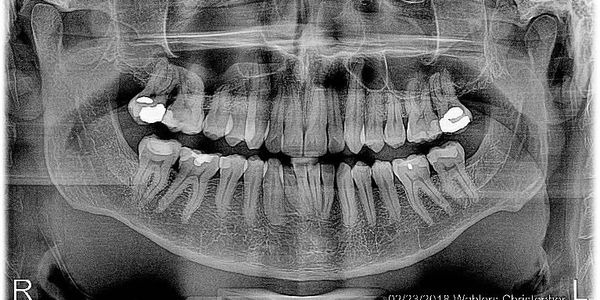
A panoramic x-ray is a specialized dental imaging technique that captures your entire mouth — teeth, jaws, and surrounding structures — in a single, wide-view image. Unlike standard bitewing or periapical x-rays that focus on small areas, panoramic x-rays provide a comprehensive overview, helping your dentist assess overall oral health and detect issues that might not be visible in traditional x-rays.
Uses of Panoramic X-Rays
Panoramic x-rays are commonly used to:
- Evaluate wisdom teeth and other impacted teeth
- Detect jaw tumors, cysts, or bone abnormalities
- Assess bone structure and growth patterns for orthodontics
- Plan dental implants or other surgical procedures
- Identify fractures or other trauma to the jaw
Advantages
- Full-mouth view in a single image: Offers a complete picture of your oral structures without taking multiple small x-rays.
- Non-invasive and quick: The process is comfortable, with minimal patient effort. The machine rotates around your head, capturing the image in seconds.
- Lower radiation exposure: While panoramic x-rays cover a larger area, modern digital systems keep radiation low.
- Helps in early detection: Provides valuable insights into hidden dental issues, allowing for early intervention and more effective treatment planning.
Cone Beam or 3D X-Ray
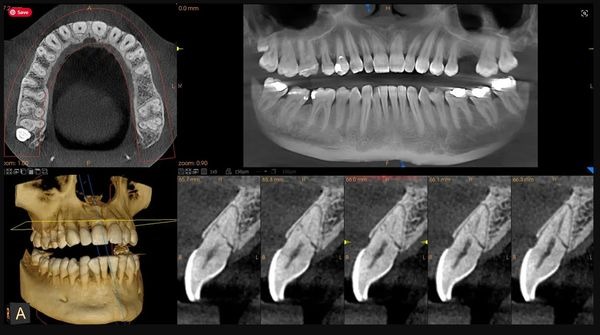
A Cone Beam CT (CBCT) scan, also called a 3D dental x-ray, is an advanced imaging technology that provides a three-dimensional view of your teeth, jaws, sinuses, and surrounding structures. Unlike traditional 2D x-rays, CBCT captures the full anatomy in high detail, giving your dentist or oral surgeon the most accurate information for diagnosis and treatment planning.
Uses of Cone Beam 3D X-Rays
CBCT scans are especially useful for:
- Planning dental implants with precise measurements of bone and nerve locations
- Evaluating impacted teeth, including wisdom teeth
- Assessing jaw tumors, cysts, or other abnormalities
- Diagnosing complex dental or jaw conditions
- Supporting orthodontic planning and airway assessments
- Detecting root fractures or complex root canal anatomy
Advantages of Cone Beam 3D Imaging
- Comprehensive, three-dimensional view: Provides a complete picture of your oral anatomy, revealing details that 2D x-rays may miss.
- Precise treatment planning: Helps your dentist place implants or perform surgery with greater accuracy, improving outcomes and reducing risks.
- Low radiation for 3D imaging: Modern CBCT units are designed to minimize exposure while delivering detailed images.
- Quick and non-invasive: The scan typically takes less than a minute, and you remain seated or standing during the process.
- Improves communication: 3D images allow your dentist to explain findings clearly, helping you understand your treatment options.
Contact Us
Moran Prairie Dentistry is located at 2718 E 57th Ave Ste 101 Spokane, WA 99223.
Related Posts
How A General Dentist Recommends Preventing Cavities
The goal of every general dentist is to preserve the natural teeth of their patients. This type of dental professional offers instruction on how to maintain good oral health. Cavities are one of the most prevalent oral health conditions in the world, so preventing tooth decay is vital for your oral health and general well-being.To…

How A General Dentist Can Help You Achieve A Healthier Smile
A healthy smile is essential for overall health and well-being. A general dentist can help maintain and improve oral health through preventive care and restorative treatments. They offer comprehensive care to ensure your teeth and gums remain healthy and happy.One of the primary responsibilities of a general dentist is preventive care. The American Dental Association…

When To Visit Your General Dentist For Tooth Sensitivity
Your general dentist can determine the cause of your tooth sensitivity. This dental issue may come from various factors. A visit to the dentist can help get you the solution you need. Here are the details on when you must see your general dentist for your tooth sensitivity.Severe dental sensitivity can prevent an individual from…