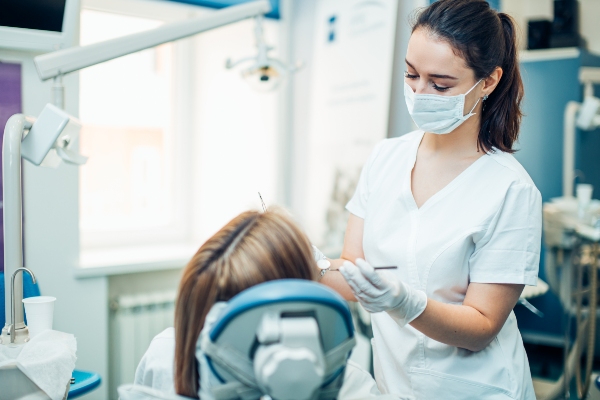
 General dentists are the number one go-to for preventing and eliminating threats to oral health. While the American Dental Association generally recommends that everyone begin attending biannual appointments at 12 months of age, we understand that some can overlook this. This first checkup can be the beginning of regular biannual appointments to help ensure your oral health.
Imaging
As part of a patient's dental records, the general dentist requests all new patients receive X-rays. This imaging technique helps the dentist gain a full view of the inner structures of the teeth and gums, something the naked eye cannot see. It is a quick process involving the patient standing completely still in front of a machine while biting down on a sterilized piece of equipment. The dental assistant adjusts the machine to take pictures of various angles of the patient's mouth.
Oral examination
Following the imaging portion of the appointment, the dental assistant will usher the patient into a separate treatment room. There, the general dentist will come and assess the X-rays and review their findings with the dental assistant and patient before performing a physical (oral) examination. The examination allows the dentist to view abnormalities on the outer structures of the teeth and gums, such as craze lines, decay, gum disease, and signs of oral cancer. They will also see how well the patient performs their oral care routine.
They will use various tools, all without causing pain. At the end of the examination, the general dentist will make recommendations to the patient that may include a change in at-home oral care products, corrective services, and preventative services or appliances.
Cleaning
A dental hygienist generally performs the cleaning process. It involves removing plaque, a sticky, bacteria-filled substance that builds up on the teeth and causes cavities. While bacteria is unavoidable, as it accumulates within four to 24 hours after brushing, tartar (hardened plaque) is avoidable. All that is required to prevent tartar is being persistent with proper oral care techniques, which involves brushing with dentist-approved toothpaste twice daily, flossing once daily, and using an antibacterial mouth rinse at least once daily.
However, once tartar appears, only a general dentist or dental hygienist can remove it by manually scraping it off the tooth and away from the gum lines. If necessary, this will be performed during the cleaning portion of the appointment. For most patients, tartar is relatively simple and painless, though it may be uncomfortable. Patients with excessive tartar or signs of periodontal (gum disease) may need a deep cleaning — also known as scaling or root planing — to thoroughly remove the hardened tartar from above or below the gum line.
Follow-up appointments
At the end of the appointment, patients will sit with an office staff member to review and schedule follow-up appointments. If the general dentist recommends restorative or preventative services, the patient must approve them before scheduling the appointment. However, if no additional services are recommended, the patient can schedule their next appointment six months from this one.
Schedule an appointment
General dentists ensure you obtain or maintain optimal oral health. Remember, protecting your teeth prevents a host of issues that can extend outside of the oral cavity. To schedule your first appointment, contact our office.
Request an appointment or call Moran Prairie Dentistry at 509-267-5758 for an appointment in our Spokane office.
Related Posts
Regular visits to the general dentist should be part of everyone’s routine, but if you have been going to the dentist since you were a child, you may never have been taught why doing so is important. Whether you need convincing to incorporate dental care into your yearly lifestyle or you want to know more…
Each visit to your general dentist is important for your oral health. Checkups include professional dental cleanings. Having this regular treatment provides more than a bright smile. Here are the reasons for getting regular dental cleanings from your general dentist.The mouth is part of the respiratory system. Bad bacteria in the mouth can reach the…
A general dentist is one of your first lines of defense against gum disease through preventive treatment. With biannual dental cleanings and professional treatments, a dentist can help you avoid tooth loss and invasive procedures. This professional dental care can give you a leg up in the fight against gum disease and help you maintain…